
Where relationships actually form
The most meaningful part of any interaction doesn’t happen during the event, the open house, or the conversation, it happens after.
Follow-up isn’t about reminding people who you are.
It’s about showing them they mattered.
This section is designed to help agents move away from rushed check-ins, automated pressure, and one-size-fits-all messaging, and toward follow-up that feels human, thoughtful, and earned.
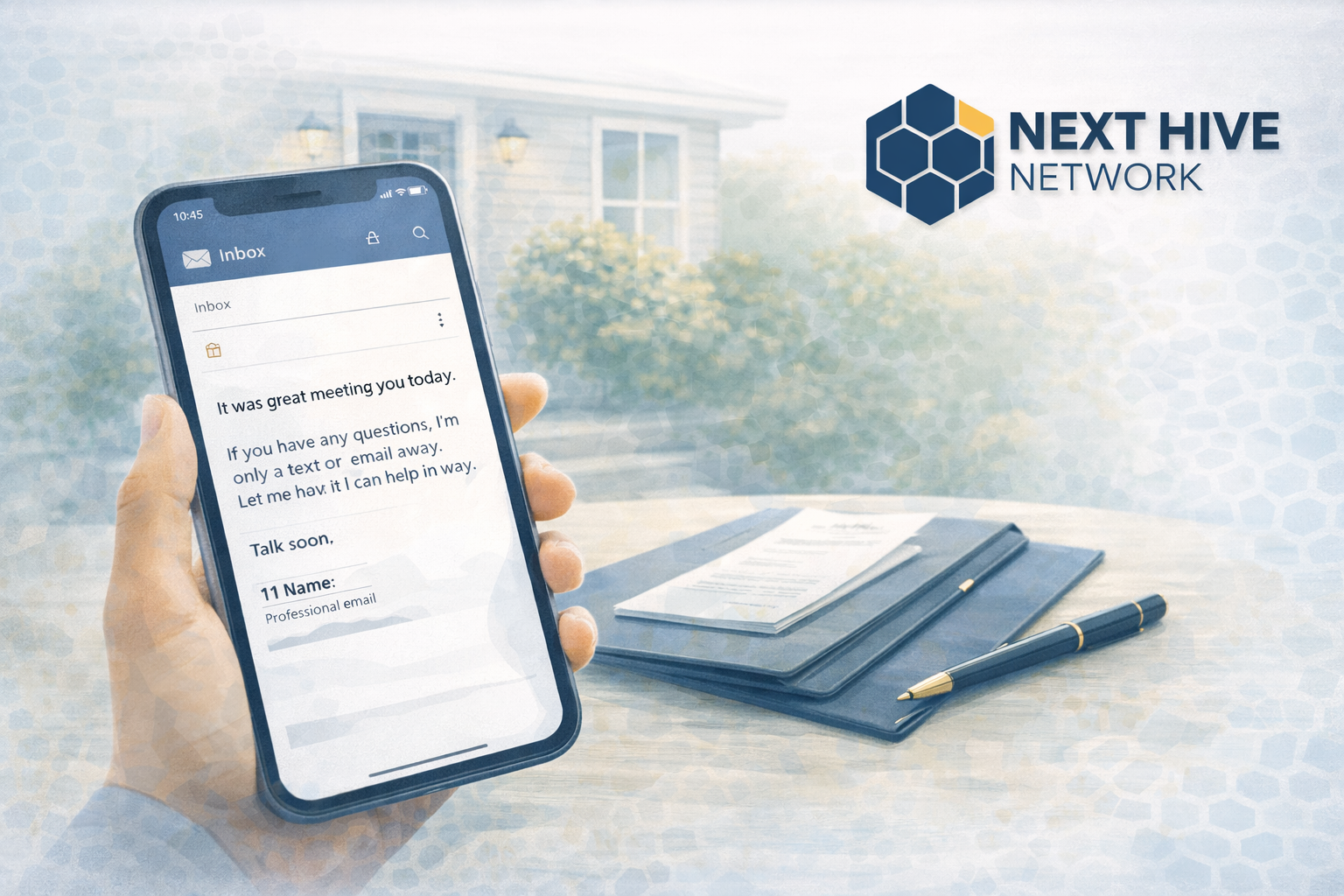
Why Follow-Up Is Where Trust Grows
People don’t remember most conversations.
They remember how someone made them feel afterward.
Strong follow-up:
- Signals respect for someone’s time and interest
- Reinforces clarity instead of urgency
- Builds familiarity without expectation
When done well, it creates a sense of ease, “I’m glad I met them.”
What You’ll Find in This Section
These resources focus on relationship continuity, not lead conversion.
You’ll find tools and systems for:
- Gentle next steps that feel optional, not transactional
- Clear communication windows (when to reach out—and when to wait)
- Language frameworks that sound like a person, not a script
- Follow-up paths based on interest level, not assumptions
Everything here is built to support long-term trust, not short-term pressure.
The Philosophy Behind the System
Not every connection needs to move fast.
Not every follow-up needs an ask.
This approach assumes:
- People decide in their own time
- Trust compounds through consistency
- Being remembered is more powerful than being persistent
Your role isn’t to chase, it’s to stay present.
When Follow-Up Is Working
You’ll know this system is doing its job when:
- Conversations reopen naturally
- Referrals come without prompting
- People say, “I appreciated that you followed up the way you did.”
That’s trust taking shape.
Gentle Next Steps (Optional, Not Transactional)
What this supports:
Giving people a clear way to stay in touch without feeling signed up for something.
Tools included:
- Soft follow-up prompts (email, text, CRM notes)
- Opt-in language that puts control back with the other person
- “No reply required” follow-up structures
Example next steps offered (not assumed):
- Receiving neighborhood updates
- Occasional market context
- A future check-in at a time they choose
Clear Communication Windows
(When to Reach Out, and When to Wait)
What this supports:
Removing guesswork and over-follow-up.
You’ll get:
- A timing framework that prevents chasing
- Recommended pause points
- Guidance on when silence means wait, not push
Included framework:
- Immediate acknowledgment
- Short pause
- One meaningful check-in
- Long-term nurture or release
Follow-Up Paths Based on Interest Level
(Not assumptions)
Instead of treating everyone the same, follow-up adjusts to observed engagement.
Interest-Based Paths:
- Quiet – Polite interest, no signals
- Warm – Engagement, curiosity, light follow-up
- Active – Clear intent or ongoing conversation
No pressure to “move them forward.”
Only alignment with what they’ve shown.
Simple Follow-Up Flow Diagram
Initial Interaction ↓Thank-You / Acknowledgment ↓──────── Decision Point ──────── ↓ ↓ Quiet Engaged(No response / neutral) (Reply / question) ↓ ↓Wait + Respect Space Light Value Follow-Up ↓ ↓Long-Term Touchpoint Check-In or Offer Help(Optional, spaced out) (No assumptions)Key principle:
Movement only happens when interest does.
Language Frameworks
(Fair-Housing Safe & Brand-Consistent)
These examples avoid assumptions, protected classes, and urgency language.
After an Open House or Event
“It was nice meeting you, thanks for stopping by.
If you’d ever like updates on homes like this, feel free to let me know. No rush at all.”
Light Follow-Up (Warm Interest)
“I’m sharing this because you mentioned liking how the space felt, no action needed, just thought you might find it interesting.”
Optional Ongoing Connection
“If it’s helpful, I send occasional notes with local market context. Happy to include you, or not, whatever works best.”
Respectful Close-Out
“I’ll step back for now, but if your plans change, I’m easy to find. Wishing you the best either way.”
What Makes These Tools Different
- No urgency triggers
- No assumed timelines
- No demographic references
- No pressure to respond
- No performative scripts
Build long-term trust over short-term pressure.
