
Getting the right people there
Thoughtful promotion that feels appropriate, not loud.
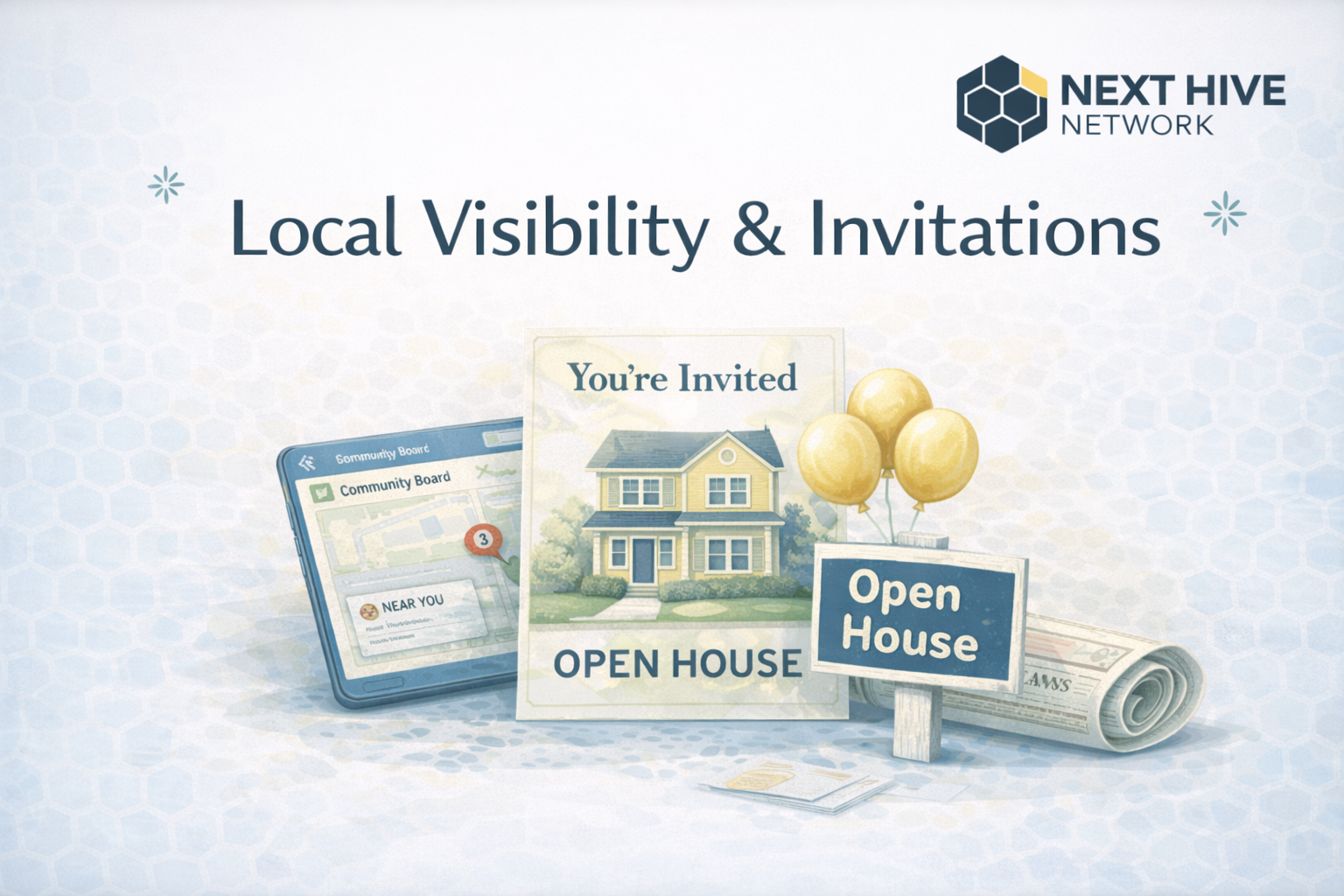
Open house visibility isn’t about broadcasting.
It’s about inviting, clearly, locally, and with intention.
This section helps you attract the people most likely to engage meaningfully, without over-promoting or performing for attention.
Start With Relevance, Not Reach
More exposure doesn’t always lead to better conversations.
Before promoting, ask:
- Who would genuinely benefit from being here?
- Who lives nearby and already has context?
- Who might appreciate a low-pressure way to look?
Relevance creates ease.
Ease leads to better interactions.
Invite the Neighbors Thoughtfully
Neighbors are often overlooked, and often the most valuable.
They:
- know the area well
- bring friends or family
- may be considering a move themselves
Simple approaches work best:
- brief, friendly door knocks
- printed invitations with a clear time window
- offering a short “neighbors-only” preview
This isn’t prospecting.
It’s community presence.
Use Signage as Guidance, Not Advertising
Signs should help people find the home, not overwhelm them.
Effective signage is:
- clear and easy to follow
- placed early and intentionally
- consistent with your branding
A calm arrival sets the tone for the experience inside.
Share Online With Restraint
Social media can support visibility when used deliberately.
Helpful guidelines:
- post early in the week, not last minute
- focus on the experience, not urgency
- share once or twice, then let it be
You’re letting people know, not convincing them.
Consider Local-First Digital Spaces
Neighborhood-based platforms often outperform broad reach.
Examples:
- community Facebook groups
- neighborhood newsletters
- local message boards
Smaller audiences, better fit.
Be Clear About What to Expect
Clarity builds trust before anyone arrives.
Make it easy for people to understand:
- when to come
- how long to stay
- whether it’s casual or guided
- if families or pets are welcome
When expectations are clear, people relax.
What to Avoid
Visibility works best when it’s restrained.
Try to avoid:
- last-minute promotion that feels rushed
- urgency-based language
- overposting across platforms
- framing the event as a “must-see”
If it feels pushy to you, it will feel pushy to them.
The Goal Is Fit, Not Traffic
A smaller group of engaged visitors is more valuable than a crowded room.
When the right people arrive:
- conversations last longer
- follow-up feels natural
- trust forms more easily
That’s the outcome worth planning for.
Bonus: When You Need More Traffic (Without Going Loud)
Use these selectively. More people should support the experience, not overwhelm it.
1. Create a Clear “Why Today” Reason
Not urgency, context.
Examples:
- First look after new staging
- Neighborhood preview before a weekend listing
- Short window before professional photos
- Seller-hosted story hour (10 minutes, once)
Specificity gives people a reason to stop by.
2. Host a Brief, Scheduled Moment
People are more likely to come when there’s structure.
Ideas:
- A 15-minute guided walkthrough at the top of each hour
- A short neighborhood overview posted on the hour
- A single Q&A window advertised in advance
This increases attendance without turning the event into a spectacle.
3. Partner With One Aligned Local Presence
One partner is enough.
Good fits:
- A local coffee shop providing small samples
- A lender offering quiet, optional consults
- A neighborhood artist or florist
The goal isn’t entertainment, it’s added relevance.
4. Leverage Neighbors as Connectors
Neighbors often drive secondary traffic.
Ways to support this:
- Offer neighbors a small stack of invitation cards
- Encourage them to bring a friend or family member
- Share a short “know someone looking?” message
People trust people they already know.
5. Use Time-Based Social Reminders
Not hype, gentle reminders.
Examples:
- “We’re opening the doors at noon, stop by if you’re nearby.”
- “Quiet afternoon open house, plenty of time to look around.”
These work best within a few miles of the property.
6. Make the Experience Family- or Pet-Friendly (When Appropriate)
This widens your audience naturally.
Ideas:
- Kid-friendly corner with coloring sheets
- Pet treats by the door
- Clear messaging that families are welcome
It removes friction and increases drop-ins.
7. Signal Activity Without Overcrowding
Subtle cues can attract passersby.
Examples:
- Open doors and visible light
- Clean, clear signage placed earlier in the day
- Balloons or flags used sparingly
The home should feel alive, not chaotic.
When you increase visibility with intention, the right people arrive.
Conversations last longer.
Follow-up feels natural.
